Purpose, Benefits, and Eligibility
Purpose
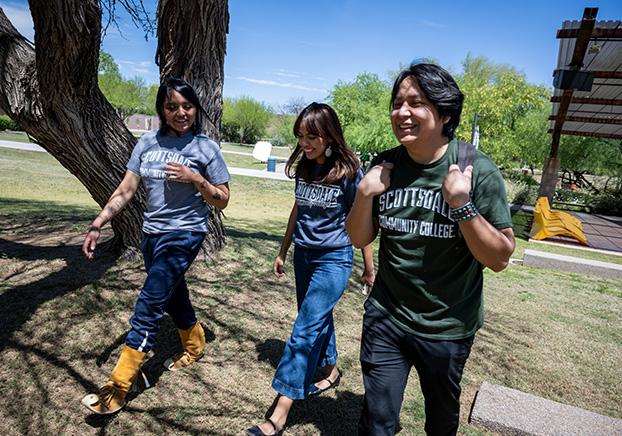
Science Opportunities and Profession Exploration (SCOPE) is funded by a grant from the National Science Foundation (NSF) and aims to eliminate barriers for underserved students interested in science by providing academic support, creating a sense of community, and strengthening self-identity as a scientist. SCOPE complies with all terms and conditions set forth by the NSF.
SCOPE supports underserved science students enrolled at Scottsdale Community College, which includes first generation college, low income, Pell Grant eligible, 25 years or older, and other nontraditional students.
Benefits
Participants in the program will receive:
- $750 stipend per semester for up to four semesters
- $2,400 paid internship with a local scientific partner
- Peer mentoring and enhanced tutoring support
- Faculty Learning Advocate to help navigate college services
- Luncheons with other SCOPE participants
- Opportunities to participate in research
Eligibility
To be eligible for SCOPE, you must meet all three of the following:
- Underserved student (includes 1st generation college student, low income, Pell Grant eligible, 25 years or older, nontraditional student)
- Enrolled in at least one in-person or hybrid in-person Natural Science course at SCC
- Interested in a career in science and pursuing a science degree






SCOPE Program Initial Results
Here are a few highlights of the results from the first three cohorts, Spring 2025 through Spring 2026.
Faculty Learning Advocate: Each SCOPE student meets with a faculty mentor every other week for individualized support and guidance.
Attendance at Instructor Office Hours: SCOPE students are required to attend their instructors office hours during the first few weeks of class and then as needed throughout the semester.
Enhanced Tutoring: SCOPE students are required to study in the Natural Science Tutoring Center for at least one hour per week. Individual peer tutoring is also provided as needed.
Results: A comparison of successful course completion (passing with a C or better) shows SCOPE students significantly outperformed their peers in both overall courses and STEM courses. For all courses, SCOPE students had a successful completion rate of 84.4% compared to 74% for MCCD students. For STEM courses, SCOPE students had a successful completion rate of 80.2% compared to 62.8% for MCCD students (Chi-square p-value < 0.005 in both cases).
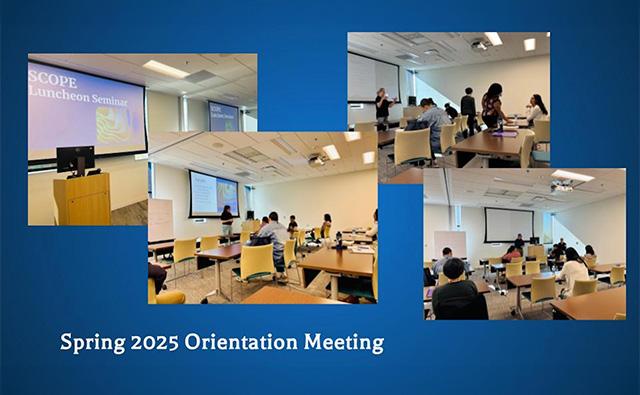
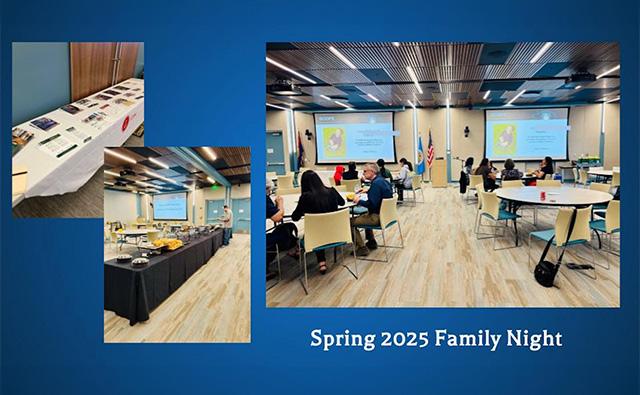
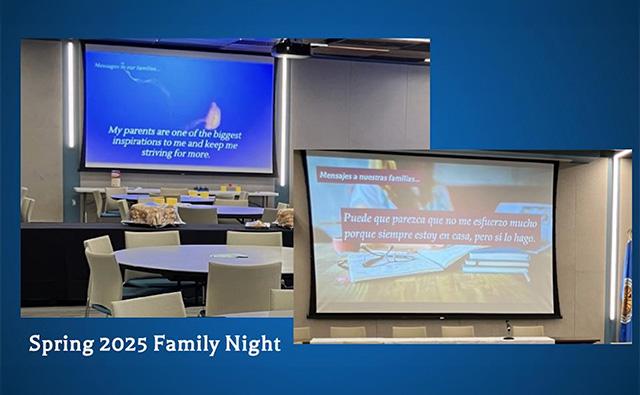
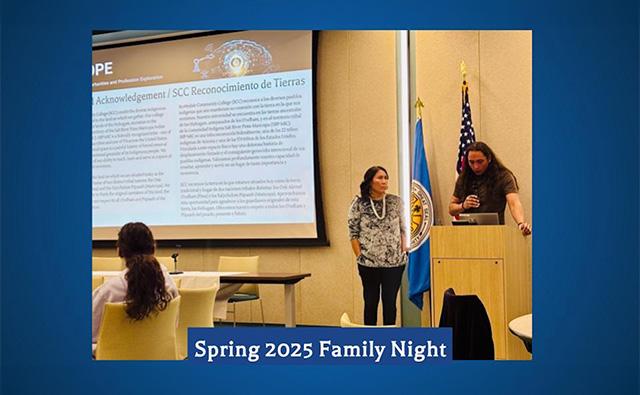
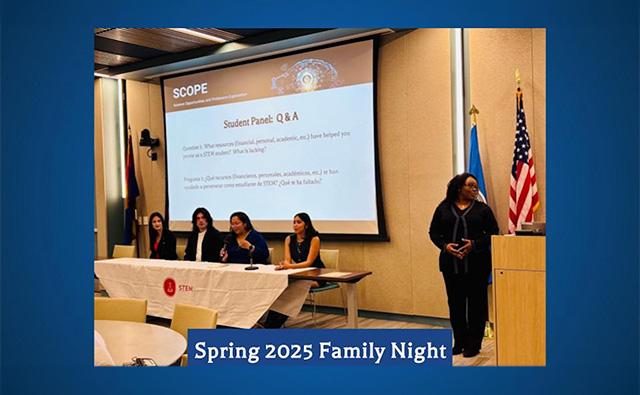
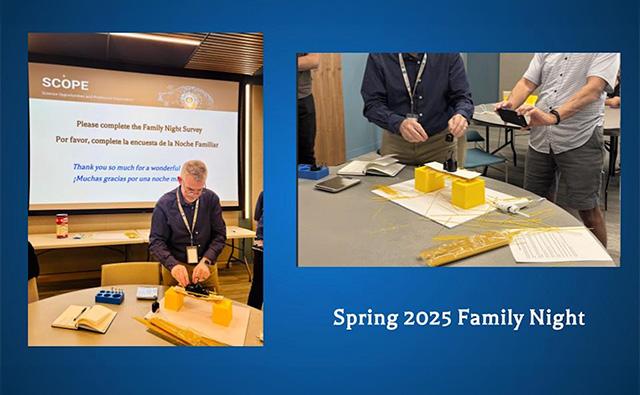
Community Engagement: All students participated in biweekly Luncheon Seminars and a Family Night, building trust and cultural connection.
Peer Mentorship: Students connected through Peer Mentors, enhancing support and reducing isolation.
Campus Belonging: Study groups and frequent use of the Tutoring Center help students built a sense of community beyond the classroom.
Results: After participating in SCOPE activities, students report a 23.7% increase in feeling respected by the natural science instructors and a 21% increase in feeling like they belong at SCC.
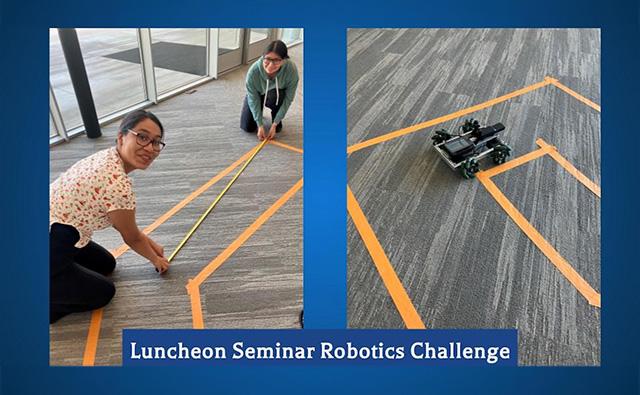
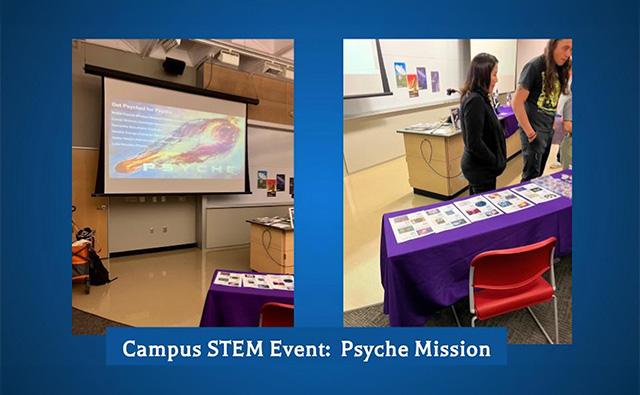
Visiting Scientists at SCOPE Luncheons: Biweekly luncheon seminars includ interactive talks by local scientists and graduate students.
Undergraduate Research: SCOPE students are encouraged to participate in research projects available at SCC.
Internships: SCOPE students can participate in a paid internship with a variety of community partners.
Results: After participating in SCOPE activities, students report a 19.7% increase in feeling like they belong to a community of scientists and thinking of themselves as scientists.
Core Team
For more information about the SCOPE program, send an email to [email protected].

- Patricia Ashby
- Program Coordinator
- Phone: (480) 423-6107
- [email protected]
- Office: NS-120
- Rebecca Linton
- Internship Coordinator
- Phone: (480) 423-6165
- [email protected]
- Office: NS-119

- Relindis Mawo
- Event Coordinator
- Phone: (480) 423-6705
- [email protected]
- Office: NS-124
- Mitch Sweet
- Peer Mentor Coordinator
- Phone: (480) 423-6372
- [email protected]
- Office: NS-127
Land Acknowledgement
Scottsdale Community College (SCC) credits the diverse Indigenous people still connected to the land on which we gather. Our college resides on the ancient lands of the Huhugam, ancestors to the O’odham and tribal territory of the Salt River Pima-Maricopa Indian Community (SRP-MIC). SRP-MIC is a federally recognized tribe - one of 22 Arizona Indigenous tribes and one of 574 across the United States. Attached to this physical space is a painful history of forced removal and the resulting intentional genocide of its Indigenous people. We remain appreciative of our ability to teach, learn and serve in a space of such importance and reverence.
SCC acknowledges the land on which we are situated today as the traditional land and home of two distinct tribal nations: the Onk Akimel O’odham (Pima) and the Xalychidom Piipaash (Maricopa). We take this opportunity to thank the original caretakers of this land, the Huhugam. We offer our respect to all O'odham and Piipaash of the past, present and future.
National Science Foundation Acknowledgement
 The Innovation in Two-Year College STEM Education (ITYC) STEM program is aligned with the NSF Improving Undergraduate STEM Education framework, which is a comprehensive effort to accelerate improvements in the quality and effectiveness of undergraduate education in STEM fields. The program advances research on the nature of learning and teaching at community colleges to improve outcomes for students who enter the workforce upon completion of their STEM degree or credential, or transfer to four-year institutions, as outlined in the "CHIPS and Science Act of 2022." To learn more about the program, visit the ITYC webpage.
This material is based upon work supported by the National Science Foundation (NSF) under Grant No. 2412935. Any opinions, findings, and conclusions or recommendations expressed in this material are those of the author(s) and do not necessarily reflect the views of the National Science Foundation.