
Paragraph Image and CTA: 6919
Great teachers change lives.
That teacher could be you!
Scottsdale Teacher Education Partnership (STEP) is a one-year model unlike any other in Arizona! If you already hold a bachelor’s degree, STEP provides your fast-track training to become a certified teacher for Kindergarten through Grade 8 in general education.
Your knowledge and life experience can make a powerful difference in the classroom. STEP helps you turn that potential into a meaningful teaching career.

Why Choose STEP
- A 12-month intensive program with classes held two evenings per week
- Flexible learning options, including hybrid (in-person and online) or live online formats for students outside Maricopa County
- Affordable tuition through community college pricing
- Supportive cohort model, where students progress through the program together
- Courses taught by experienced classroom teachers and college faculty
- Strong career prospects for graduates
- Partnerships with schools across Arizona
- Approved by the Arizona State Board of Education

Learn in a Way That Fits Your Life
- In-Person Hybrid
- For residents living in Maricopa County
- Evening classes, 2x/week
- Face-to-face in-person meetings and online work
- Live Online
- Available statewide for residents living outside Maricopa County
- Evening classes, 2x/week
- Face-to-face online meetings and online work
Choose your Certification Pathway
The SCC STEP program offers two pathways to teacher certification. Both pathways are designed for individuals who have a minimum of a bachelor’s degree in any discipline.
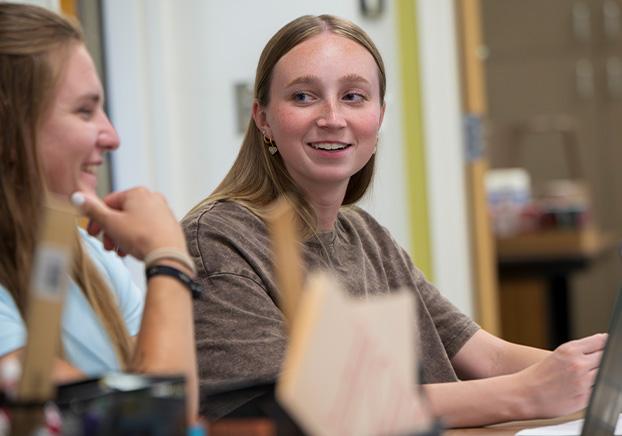
Traditional Teacher in Training
- Learn alongside mentor teachers
- Gain real classroom experience
- Complete internships and student teaching in local schools
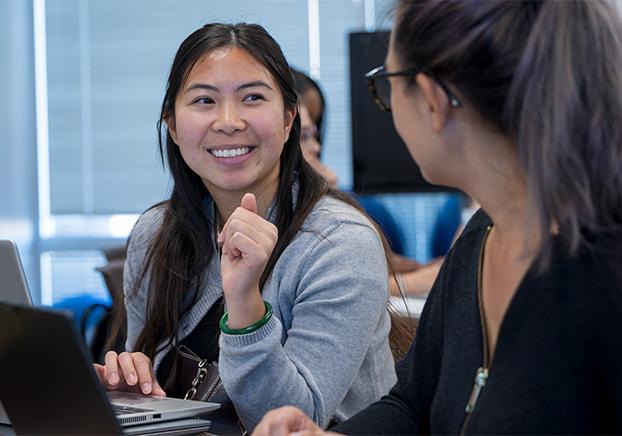
Teacher in Residence
- For substitutes and paraprofessionals ready to lead a classroom
- Teach full-time as the teacher of record
- Earn while completing certification
STEP Courses: Elementary Education, K-8
The Scottsdale Teacher Education Partnership (STEP) post-baccalaureate teacher preparation program at Scottsdale Community College (SCC) is designed for students with a minimum bachelor's degree in any discipline who wish to become elementary teachers in grades K through 8. It fulfills the requirement for the Institutional Recommendation leading to K-8 Elementary Arizona Teacher Certification.
The total number of credit hours required for this program is 51.5. Classes are taken as a cohort and are not offered every semester. For a complete list of the required courses, please see the STEP Calendar below.
Here are the courses offered this semester.
Check back for the May Calendar
STEP Calendar: No SCC School Days
All in-Person and Live Online classes will be paused during No STEP School Days.
- May 25 - Memorial Day
- June 18 - Juneteenth
- June 29 - July 3 - Independence Day
- September 7 - Labor Day
- October 12 - 16 - Scottsdale USD Fall Break
- November 11 - Veterans Day
- November 23 - 27 - Thanksgiving
- December 25 - January 1 - Winter Break
- January 18 - MLK Jr. Day
- February 15 - Presidents Day
- March 15 – 19 - Spring Break
- May 31 - Memorial Day
- June 17 - Observance of Juneteenth
- July 5 - Observance of Independence Day
- September 6 - Labor Day
- November 11 - Veterans Day
- November 25, 26 - Thanksgiving
- December 24 - January 2 Mid-Year Recess
Steps to Certification
Visit Maricopa Online Admissions to start the application.
On the Select Primary College and Field of Interest page, make the following selections:
- Scottsdale Community College for the Primary College of Interest
- Take a Class (not pursuing degree/certification) for Select a primary reason for attending this college
- Post-Baccalaureate Teacher Education for Select a plan most aligned with your career and educational goals
- The expected start date: Choose Summer or Spring for the May Cohort, and choose Fall for the November Cohort
Write down your MEID and password for future use.
The process to be fully admitted can take up to 24 hours. The STEP Application will not be available until the Maricopa/Scottsdale Community College application has been processed. For assistance with the admissions process, contact SCC Admissions and Records.
Submit the STEP Application.
In the application, you will confirm that you have emailed two individuals to complete the letter of recommendation using the provided STEP Recommendation Form, below. Click the Letter of Recommendation link, download the form, and email it to two recommenders. Do not ask your recommenders to write a separate letter; rather, use the provided form. References cannot be immediate family or relatives. References can be prior or current work/volunteer acquaintances, or they can be community-based, such as a neighbor.
Once your application has been received, the Program Coordinator will email you at your Maricopa Student Email address to schedule a Virtual Meet & Greet. Financial Aid, ATA Scholarship, and enrollment information will be shared, and any questions you have about STEP will be addressed.
You will receive a calendar invitation to attend Virtual STEP Orientation led by the STEP Director. This meeting typically takes place in the evening and about two weeks before classes start.
When all STEP classes have been successfully completed, your Institutional Recommendation will be sent to the Arizona Department of Education (ADE). You can apply for your K-8 Elementary Teaching Certificate one you have met the Arizona Educator Proficiency Assessments (AEPA).
STEP is proud to partner with Arizona Teachers Academy!
The goal of the Arizona Teachers Academy (ATA) is to promote education as a career and bring more qualified individuals into the classroom. Please note that the availability of this scholarship is subject to funding and legislative approval. In the event of insufficient funding or if the relevant legislation is not renewed or continued, the scholarship may not be awarded for the current or future academic years. We encourage all applicants to stay informed about the status of funding and legislative actions that may impact the scholarship program.
The Arizona Teachers Academy at SCC provides financial assistance to qualified candidates who are enrolled in the STEP post-baccalaureate teacher preparation program. The scholarship will pay for tuition costs and course fees.
ATA scholarships are awarded on a first-come, first-served basis for students who meet the following eligibility requirements:
- Are admitted to the SCC STEP program
- Have submitted a Free Application for Federal Student Aid (FAFSA)
- Must be an Arizona resident.
For each academic year the Arizona Teachers Academy scholarship is awarded, you will be expected to teach in an Arizona public or charter school. Since the STEP program crosses two academic years, you will be expected to teach in an Arizona school for at least two years.
If a candidate does not fulfill the required two years of teaching in an Arizona school, the candidate will be required to reimburse the Arizona Board of Regents for the amount of the awarded ATA scholarship for tuition and fees; i.e., the scholarship turns into a loan.
STEP Student Testimonials
See what previous STEP students have to say about the teacher certification program:
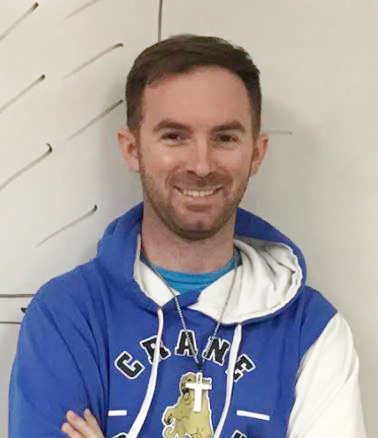 My name is Nicholas Young, and I am a fourth-year teacher currently working in Yuma Arizona. I entered the field of education under a temporary teaching certification and am now in the process of securing my official state teaching license.
Each class that we have taken in the course has been designed with the knowledge that everyone in the cohort is currently working as a full-time teacher, and our class lessons and homework reflect this fact. Our work in the program builds off our experiences in the classroom and feels meaningful and productive, versus the random filler work that other college classes sometimes give out. In fact, there have been several times already where I have taken what we learned in our STEP classes and applied it to my current classroom and the way that I teach.
My peers in the program have been an incredible asset as well. We all come from different walks of life, yet we are all in the same position in how we are working toward our state teaching license. Right away our group bonded together and have been extremely supportive in our learning process. In the end though, the greatest part of this program so far has been the professors who have been teaching the courses. Each one of them is an experienced teacher with years spent working in classrooms and as academic coaches. They have all been very engaging and very accommodating.
Overall, I have greatly enjoyed my time in the STEP program and greatly benefitted from the content that we have been taught. I have made some great friends in the program, while also being exposed to valuable resources that teachers need to manage their classes. This program was very well organized and convenient, being fully online and accessible from anywhere in the state. I would fully recommend this program for anyone interested in becoming a teacher in the future.
 The STEP program was an amazing experience that has given me the confidence and skills to be a competent educator. I loved the relationships I built with my cohort and faculty. I felt supported throughout every part of my experience. Being able to take courses concurrently with in-field internships helped me develop my ability to manage a classroom and prepare engaging lesson plans.
 The STEP program was exactly what I needed to enter the education field. After being out of school for 30 years, I needed a jump start on learning to learn again. STEP provided me with the tools I needed to transition into being a teacher that a solely online program could not. The classroom experiences were key to my success and love for the profession.
 The SCC STEP program was by far my best educational experience. The entire year was packed with learning from extremely hands-on faculty, my amazing cohort peers, and the many inspirational teacher mentors who guided me. The SCC STEP program created relationships that have impacted my career and molded me into the educator that I am today.

Traditional Teacher in Training
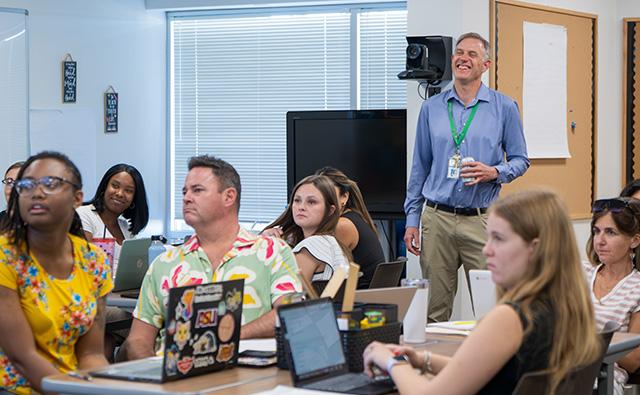
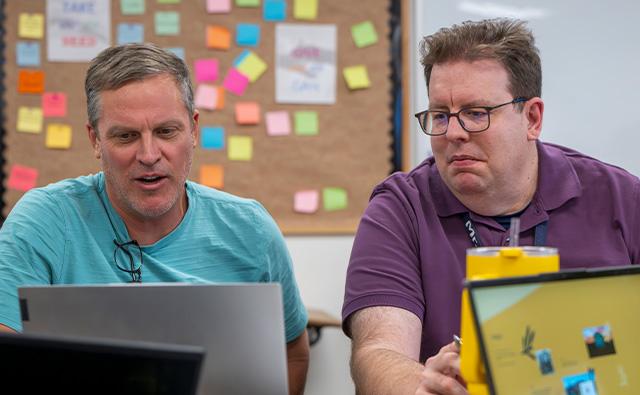
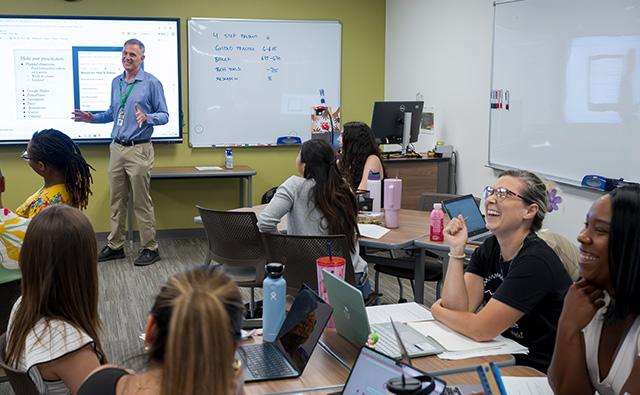
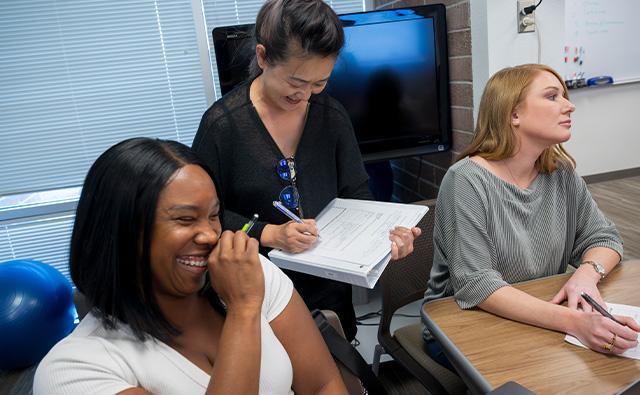
The Traditional Teacher in Training pathway is a field-based immersion program where candidates, who have a bachelor’s degree, learn alongside highly qualified teachers for a full year while concurrently completing required education coursework.
Candidates complete the program, which begins in May and ends the following May, as a cohort and are required to commit to the program for the full year.
Classes are a blend of face-to-face and online learning and meet Monday and Tuesday evenings from 5 – 8:30 pm.
- From mid-May through July, candidates attend classes at SCC.
- From August to February, candidates attend classes at SCC and spend two consecutive full days at K-8 schools as an intern working side-by-side with teachers in classrooms (usually 7:30 am – 3 pm).
- From February to May, candidates no longer attend classes at SCC and spend five days per week, for a total of 12 weeks, student teaching in a K-8 classroom.
Candidates complete the program, which begins in May and ends the following May, as a cohort and are required to commit to the program for the full year.
Classes are online and meet Wednesday and Thursday evenings from 5 – 7:30 pm.
- From mid-May through July: candidates attend online classes through SCC.
- From August to February: candidates attend online classes through SCC and spend two consecutive full days at K-8 schools as an intern working side-by-side with teachers in classrooms (usually 7:30 am – 3 pm).
- From February to May: candidates no longer attend online classes at SCC and spend five days per week, for a total of 12 weeks, student teaching full-time in a K-8 classroom.
Candidates complete the program, which begins in November and ends the following December, as a cohort and are required to commit to the program for the full year.
Classes are a blend of face-to-face and online learning and meet on Wednesday and Thursday evenings from 5 – 8:30 pm.
- From November through December, candidates attend classes at SCC.
- From January to mid-May: candidates attend classes at SCC and spend two consecutive full days at K-8 schools as an intern working side-by-side with teachers in classrooms (usually 7:30 am – 3 pm).
- From mid-May through July, candidates attend classes at SCC.
- From August to October, candidates attend classes at SCC and resume interning in classrooms.
- From October to December, candidates no longer attend classes at SCC and spend five days per week, for a total of 12 weeks, student teaching in a K-8 classroom.
Teacher in Residence
The Teacher in Residence pathway allows candidates who have a bachelor’s degree to sign a teaching contract and teach in the classroom while concurrently completing required education coursework. The candidate is responsible for securing a full-time teaching position in a K-8 public, charter, or private school.
Candidates complete the program, which begins in May and ends the following May, as a cohort and are required to commit to the program for the full year. Classes are a blend of face-to-face and online learning and meet on Monday and Tuesday evenings from 5 – 8:30 pm. The internships and twelve weeks of student teaching will be completed within the candidate’s own classroom and campus.
Candidates complete the program, which begins in May and ends the following May, as a cohort and are required to commit to the program for the full year. Classes are online and meet on Wednesday and Thursday evenings from 5 – 7:30 pm. The internships and twelve weeks of student teaching will be completed within the candidate’s own classroom and campus.
Candidates complete the program, which begins in November and ends the following December, as a cohort and are required to commit to the program for the full year. Classes are a blend of face-to-face and online learning and meet Wednesday and Thursday evenings from 5 – 8:30 pm. The internships and twelve weeks of student teaching will be completed within the candidate’s own classroom and campus.
Contact Information
Contact Information
- Mary Pasco
- Program Director, STEP
- Office: SBE-129
- Phone: (480) 423-6174
- Email: [email protected]
- Department Office:
- Office: SBE-127
- Email: [email protected]
In the News
Scottsdale Independent (2022): STEP program accelerates Arizona teachers into classrooms.
Fast Track into a Teaching Job with SCC's "Live Online" Teacher in Residence STEP Program.
Scottsdale Independent (2019): Newly certified teachers graduate from Scottsdale Community College STEP program.